The Best Cutting Board for Raw Meat: Why Steel Wins, and Which to Buy
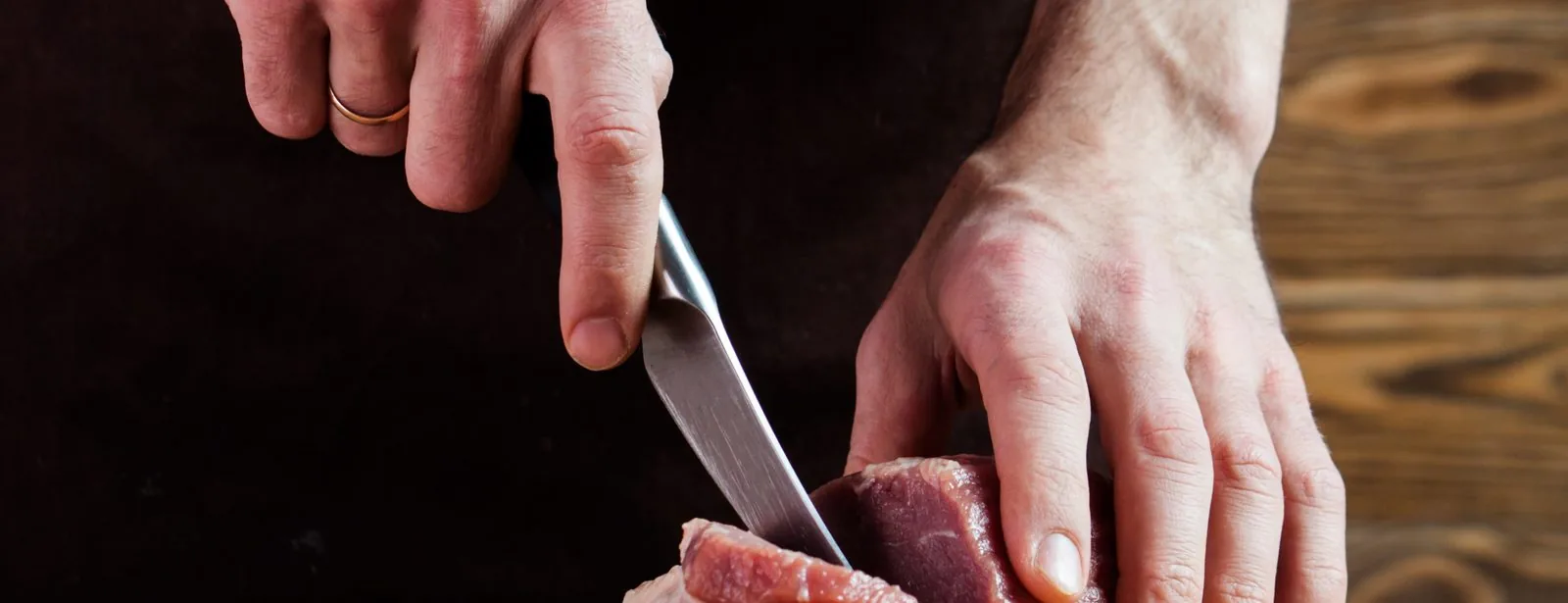
Raw meat is the one job where the board is a food-safety decision, not a preference.
If there's one job where the cutting board really matters, it's raw meat. Chicken, fish, and pork leave behind bacteria you can't see, and the whole question is whether your board lets you get rid of all of it. This is the one prep task where a wrong board is a genuine food-safety issue, not just a preference. So we'll be direct about what wins and why.
The Short Answer
For raw meat, the best cutting board is a non-porous one you can fully sanitize, and among those, solid stainless steel is the strongest pick. The USDA's guidance is that any board for raw meat and poultry should be non-porous and thoroughly cleanable, and that deep knife cuts in a surface are a food-safety problem because bacteria hide in them. Steel checks both boxes better than anything: it's non-porous, it never develops bacteria-harboring gouges the way plastic does, and it shrugs off the hot water and sanitizer that actually kill pathogens.
Why Not Plastic or Wood for Meat?
Plastic looks right and ages wrong. A new plastic board is non-porous and dishwasher safe, which is why it's the classic meat board. The problem is what happens after a few months: knives carve deep grooves, and those grooves trap bacteria that washing struggles to reach. The USDA's own guidance says a board with lots of deep cut marks should be replaced, precisely because those cuts are where bacteria hide. Plastic also sheds microplastics into your food as it wears, the exact issue that sends people to metal in the first place. We cover that on the microplastics page.
Wood is porous, and that cuts both ways. Good hardwood has a mild natural antibacterial effect, which is real. But wood is still porous, it can't go in the dishwasher, and you can't sanitize it as aggressively as metal without damaging it. For your best knife and for bread or produce, wood is wonderful. For raw chicken, it's the surface you have to be most careful with, not least.
Steel takes the abuse and stays sanitary. Cut on it for years and it never develops a gouge that hides anything. Scrub it, bleach it, run it under water as hot as you like. A scratched steel board is exactly as clean as a new one, because the scratches are non-porous too. That's the property that makes it the right meat board.
The Smartest Habit: A Dedicated Meat Board
Whatever you buy, the highest-value food-safety move is having a board used only for raw meat, kept separate from the one you use for produce and ready-to-eat food. That single habit does more to prevent cross-contamination than any material choice. Steel makes it easy and cheap to do, because a good steel board costs the price of lunch, and some come as sets so you can assign a size to each job.
Our Picks for Raw Meat
1. INZOO 16x11 All-Steel: Best Overall for Meat
INZOO 16" x 11" Double-Sided Stainless Cutting Board
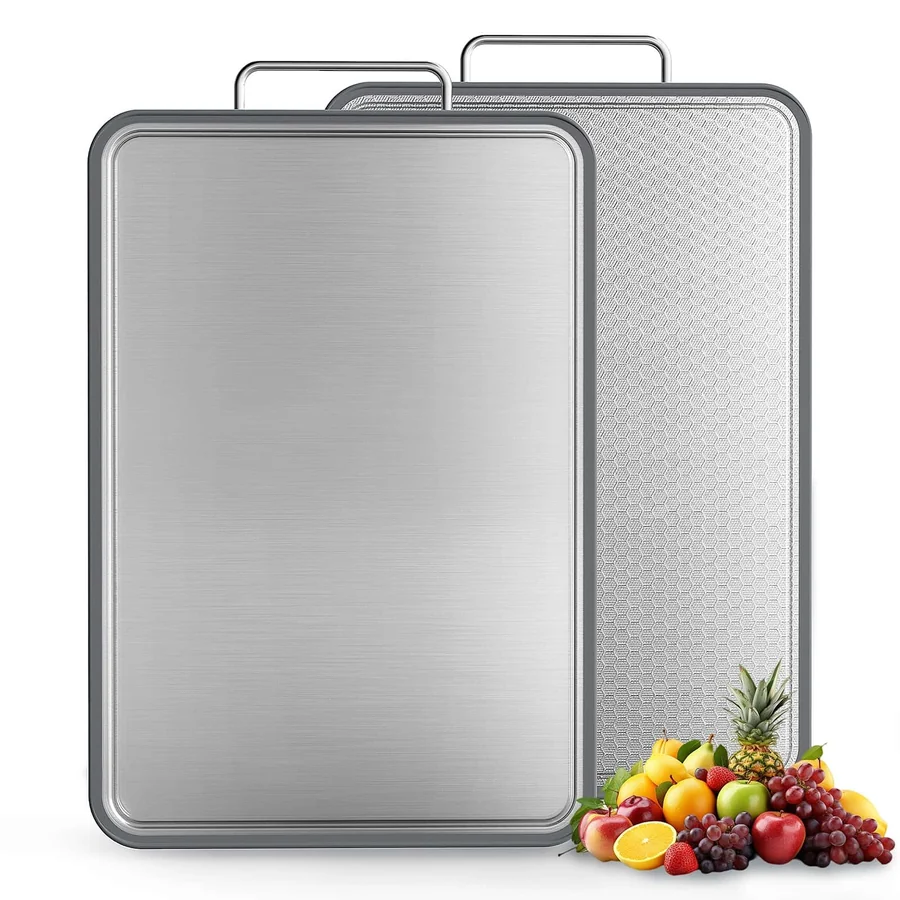
This is the one we'd hand anyone whose main job is meat. Both faces are 304 steel, so there's no plastic side to gouge or shed, and each side has a juice groove to catch the runoff from a raw roast or a spatchcocked chicken. A silicone border stops it sliding and a handle makes it easy to carry to the sink and sanitize. At 16 by 11 inches it's big enough to break down poultry without crowding. Hand wash recommended, and it'll haze with use, which changes nothing about how clean it gets.
Pros
- Both sides real 304 steel, fully sanitizable
- Juice groove on each face for meat runoff
- Silicone border grips and quiets it
- Big enough to break down poultry
Cons
- Dulls knives like any steel board
- Shows cosmetic scratch haze
- Hand wash recommended
2. URMONA 3-Piece Set: Best for Separating Meat, Fish, and Produce
URMONA 3-Piece SUS 304 Stainless Cutting Board Set (S/M/L)
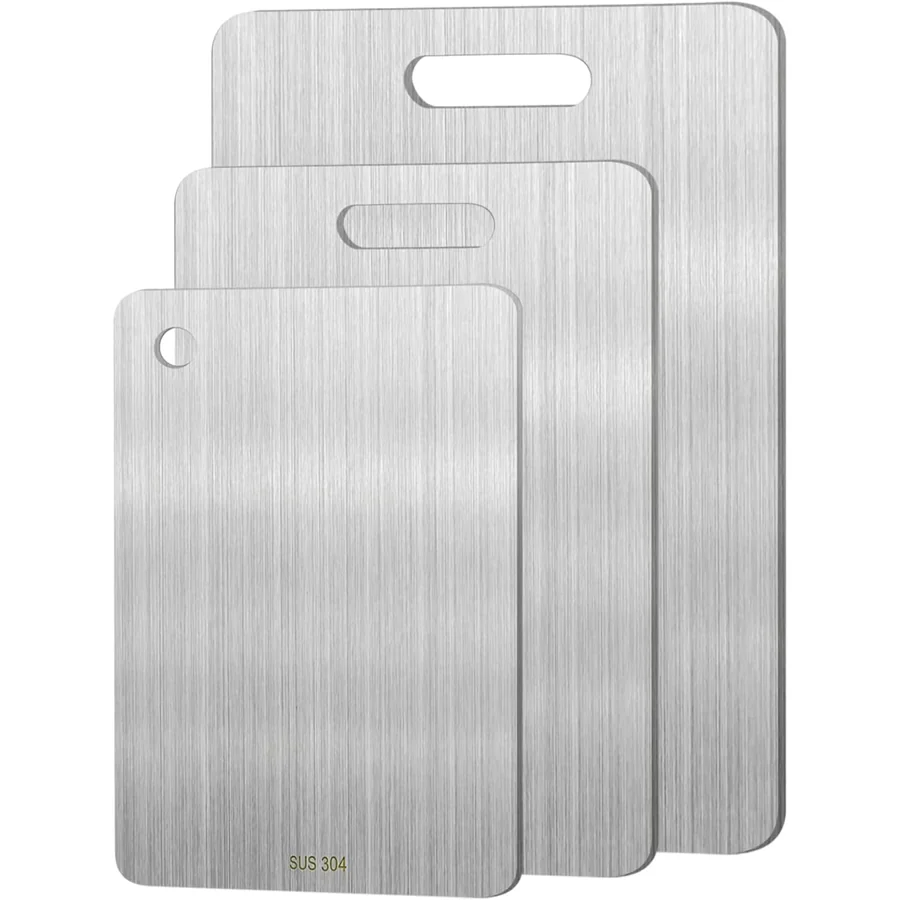
If the real goal is preventing cross-contamination, a set makes the dedicated-board habit automatic. Three sizes in the same 304 steel let you assign one to raw red meat, one to poultry and fish, and one to ready-to-eat food, with no color-coded plastic shedding into anything. Burr-free edges, dishwasher safe, and they store on end. They run thin and flex a little when carried loaded, which doesn't matter under a knife on the counter.
Pros
- Three boards for true separation by task
- Real cross-contamination control, no plastic
- Dishwasher safe, easy to store
Cons
- Thin, flexes when carried loaded
- No juice grooves
- Small board is quite small
3. MUGAA 17.7: Best Large Board for Big Cuts
MUGAA 17.7" Steel + PP Board with Built-In Sharpener
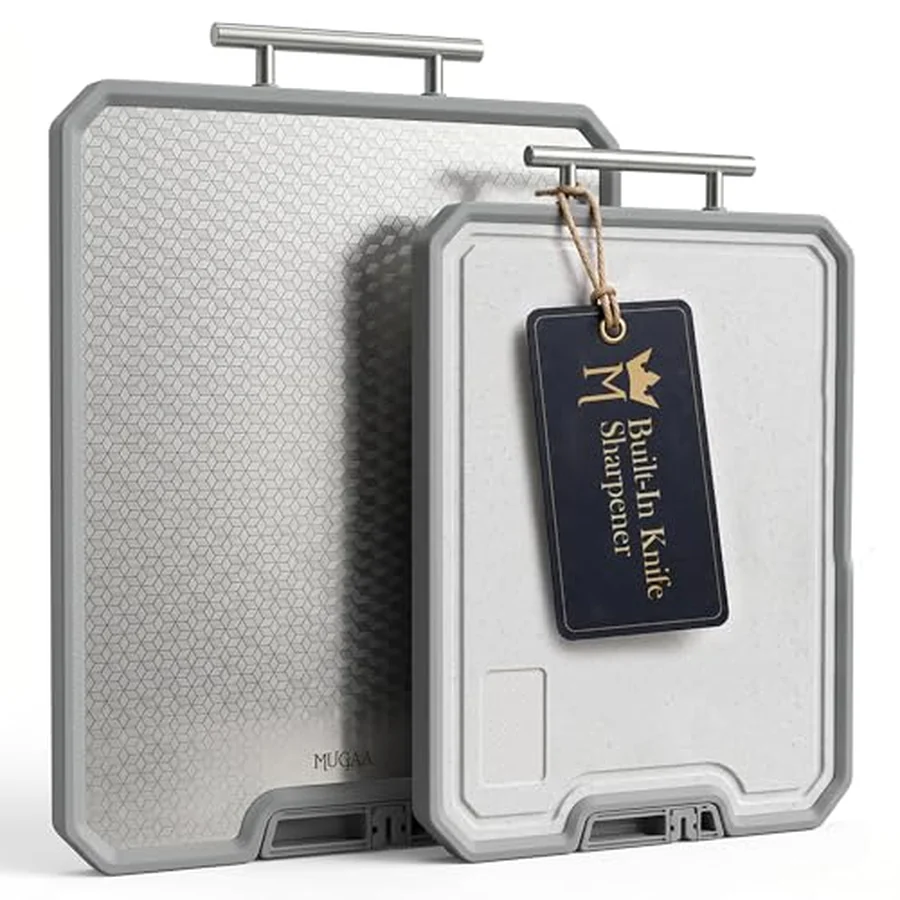
For carving a holiday roast or breaking down a whole bird, the extra surface helps, and this is the biggest board we recommend. The steel side handles the raw meat and sanitizes hard; flip to the PP side for produce so your edge isn't always on metal. It's dishwasher safe and the built-in sharpener is a nice hedge against the one downside of cutting on steel. Just remember the soft side is plastic, so for meat itself, stay on the steel face.
Pros
- Largest board here, room for big roasts
- Steel side sanitizes hard after raw protein
- Dishwasher safe, built-in sharpener
Cons
- Soft flip side is plastic
- Heavy
- Don't run good knives through the sharpener
Best Budget Meat Board
BEVISS 18/8 Compact
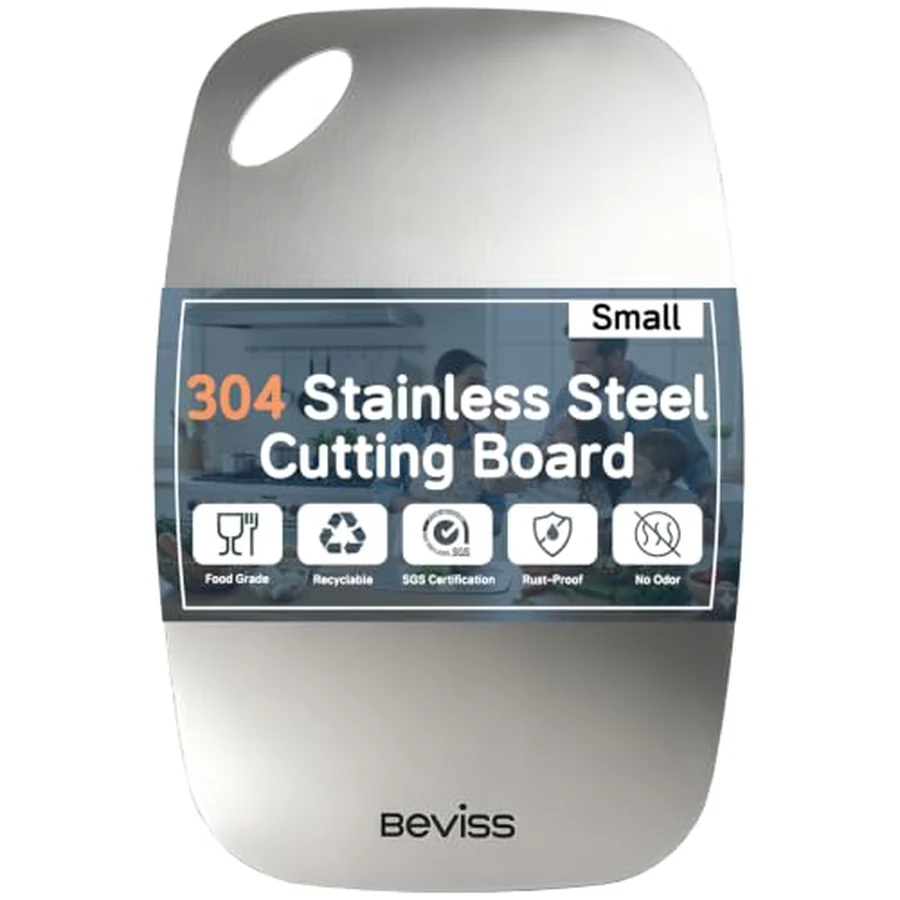
Want a cheap board dedicated to raw meat alongside a wood board for everything else? At about $13 the BEVISS is the least expensive real steel board we'd trust. It's small at 11.5 by 8 inches, which is fine for trimming a couple of chicken breasts, and it's genuine 18/8 steel at a real thickness. Put a damp towel under it for grip and noise.
Check price on Amazon Read full reviewHow to Prep Raw Meat Safely, Steel or Not
- Keep a board only for raw meat. Never chop produce or plate cooked food on the same surface without a full wash and sanitize in between.
- Sanitize after every use. Hot soapy water first, then a diluted bleach solution or food-safe sanitizer for raw meat, then rinse. Steel takes this without complaint.
- Dry it. A quick towel-dry prevents water spots on steel and keeps everything clean. See care and maintenance.
- Retire gouged plastic boards. If you're still using a plastic board for meat, replace it once it's covered in deep cut marks, or switch to steel and stop worrying about it.
The verdict: The best cutting board for raw meat is a non-porous one you can truly sanitize, and solid stainless steel is the standout because it never develops the bacteria-trapping gouges that make an old plastic board a hazard. Get the INZOO all-steel 16x11 for a single dedicated meat board, or the URMONA set if you want to separate meat, fish, and produce properly. Whichever you pick, keep it for raw protein only, sanitize it every time, and pair it with a wood board for your fine knife work.