Stainless Steel vs Titanium vs Wood: Which Cutting Board Actually Wins
Once you decide to get off plastic, three materials are left standing: stainless steel, titanium, and wood. They're not really competing for the same job, which is the thing most comparison posts get wrong. Here's how they actually stack up, and why the right answer for most kitchens is two boards, not one. If it's really steel versus titanium you're weighing, with the hardness numbers and the coating trap laid out in full, read our deep stainless vs titanium comparison.
Side by Side
| Stainless Steel | Titanium | Wood | |
|---|---|---|---|
| Hygiene | Non-porous, sanitizes fully | Non-porous, sanitizes fully | Porous, natural antibacterial effect |
| Kind to knife edge | Hard on edges | Hard on edges (worse if coated) | Best of the three |
| Microplastics | None | None | None |
| Durability | Effectively forever | Effectively forever | Can crack, warp, needs care |
| Maintenance | Rinse, often dishwasher safe | Rinse, usually hand wash | Oil regularly, dry flat, hand wash |
| Odor/stain | Resists both | Resists both | Can hold both |
| Price | $13 to $40 | $60 to $200+ | $30 to $150+ |
Knife Dulling: The Honest Ranking
This is the argument everyone has, so let's settle it plainly. For preserving a knife edge, the rough order from best to worst is: end-grain wood, then plastic, then titanium, then stainless steel, then glass. Wood wins because the fibers give slightly and let the edge sink in, spreading the force. Any metal board is harder than your blade wants, so it wears the edge faster.
Two things keep this from being a dealbreaker for steel. First, "faster" doesn't mean "ruined in a week." It means you sharpen more often. If you already own a honing steel and a sharpener and use them, this is a minor tax. If you never sharpen your knives, the board isn't your real problem. Second, the fix is free: keep a wood board for fine knife work and use steel for the jobs where hygiene beats edge care, mostly raw meat and wet, smelly prep. We cover technique in care and knife-dulling.
Where Titanium's Story Falls Apart
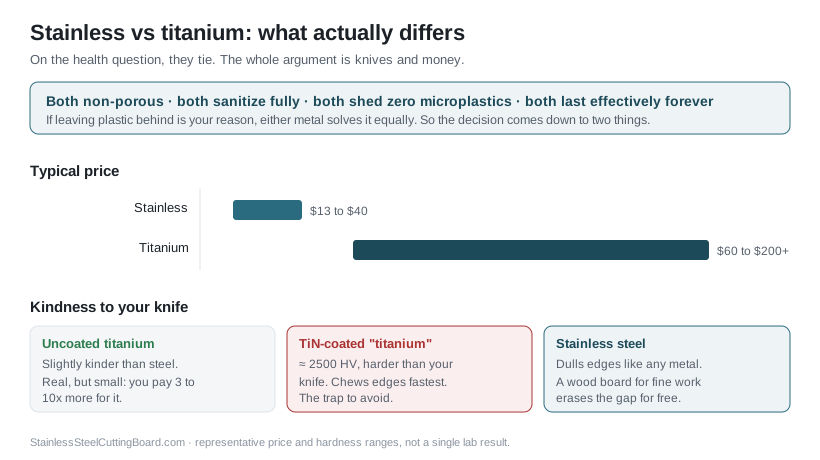
Titanium boards market themselves as the premium non-porous board that's gentler on knives than steel. There's a grain of truth and a lot of markup. Uncoated food-grade titanium is somewhat kinder to an edge than stainless. But here's the trap: many titanium boards on the market carry a titanium-nitride (TiN) coating, and TiN is significantly harder than your knife steel. A coated titanium board can chew an edge faster than plain stainless, the opposite of what you're paying a premium for.
So titanium can be a fine board, but only if it's uncoated, and you're paying three to ten times the price of a stainless board for a non-porous surface that stainless already gives you. For most people that math doesn't work. If you want metal, stainless does the same hygienic job for a fraction of the money.
If You Want Titanium: Vanotium
If you've read all that and still want a titanium board, the one getting the most attention is Vanotium, a direct-to-consumer titanium cutting board. It leans on the same real advantages any titanium board has: non-porous, antibacterial, scratch and stain resistant, dishwasher safe, and no plastic to shed. Unlike the stainless boards in our main roundup, this one sells straight from the brand rather than through Amazon.
Here's our honest read. The hygiene case for titanium is legitimate, the same non-porous logic that makes stainless worth buying. The brand also markets it as knife-friendly, which is the one titanium claim we'd want to verify yourself rather than take on faith, given how much the coating question decides. The thing that makes this an easy no-risk test is the 30-day money-back guarantee: order it, cut on it for a few weeks, and if it dulls your knives faster than you like or doesn't feel worth the premium over stainless, send it back. That's the right way to settle the knife question for your own knives and your own hands.
Who it's for: buyers who specifically want titanium's premium feel and non-porous surface and would rather buy from the brand with a guarantee than pick a stainless board off Amazon. If you mainly care about killing plastic and microplastics for the least money, a stainless board does that same job for a fraction of the price. If you want the titanium version and a risk-free trial, Vanotium is the one to try.
Where Each One Actually Belongs
Stainless steel: raw meat, poultry, fish, garlic, onion, anything you want to scrub or run through the dishwasher and know it's truly clean. It's the sanitary workhorse and it's cheap enough to own several. This is the board most kitchens are missing.
Wood: bread, herbs, cheese, plating, and any job where you're doing precise knife work and want to protect the edge. It's also the prettiest board to leave on the counter. The cost is upkeep: oil it, dry it standing up, never soak it, never dishwasher it.
Titanium: if you specifically want a non-porous board that's a touch easier on knives than steel, and money isn't the deciding factor, and you confirm it's uncoated. That's a narrow set of buyers.
The verdict: For most kitchens the winning setup is a stainless steel board for meat and wet, smelly prep, plus a wood board for delicate knife work. That pair covers hygiene and edge care for well under the price of one titanium board. Buy titanium only if you want its exact niche and you verify it's uncoated. Whatever you pick, all three beat plastic on the one thing that probably brought you here: they shed no microplastics.