Stainless Steel vs Titanium Cutting Boards: The Deep Comparison
Titanium cutting boards are having a moment. Scroll any kitchen corner of the internet in 2026 and you'll find a wall of them: "100% pure titanium," "medical grade," "knife-friendly," "superior to stainless steel." The pitch is that titanium is the upgrade, the non-porous metal board that finally goes easy on your knives. Some of that is true. A lot of it is markup and marketing. This is the long version of the comparison, with the hardness numbers that actually decide it, so you can tell which is which. For where wood fits in too, see steel vs titanium vs wood.
They Agree on More Than You'd Think
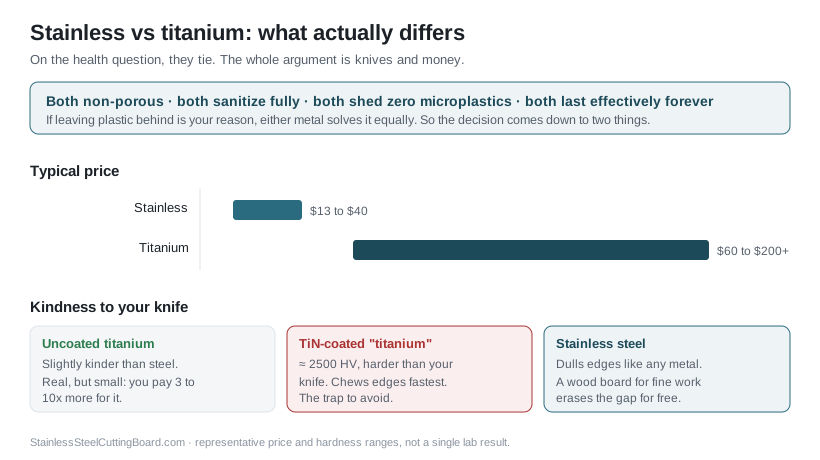
Start with what isn't in dispute. Both stainless steel and titanium are non-porous metals. Both sanitize completely, hold no bacteria in surface marks, shed zero microplastics, resist odor and stains, and effectively last forever. If your entire reason for leaving plastic is the microplastics research, both metals solve that problem the same way and equally well. On the health question that brings most people here, it's a tie. The whole argument between them is about two things: knives and money.
Side by Side
| Stainless Steel | Titanium (uncoated) | "Titanium" (TiN coated) | |
|---|---|---|---|
| Hygiene | Non-porous, sanitizes fully | Non-porous, sanitizes fully | Non-porous |
| Microplastics | None | None | None |
| Surface hardness (approx.) | ~170-220 HV | ~350 HV | ~2,500 HV |
| Effect on knife edge | Dulls edges | Slightly kinder than steel | Chews edges fastest |
| Durability | Effectively forever | Effectively forever | Coating can wear |
| Weight | Heavier | Lighter | Varies |
| Typical price | $13 to $40 | $60 to $200+ | $30 to $100 |
The Knife Question, Settled With Numbers
The core claim for titanium is that it's gentler on your edge. For genuinely uncoated, food-grade titanium, that claim has a real basis. Bench comparisons put edge loss around 20 to 30 percent after 500 chops on stainless, versus roughly 10 to 15 percent on titanium alloy over the same run. Titanium's lower abrasion coefficient is doing real work there. If you cut heavily and you sharpen rarely, an uncoated titanium board will stretch the time between sharpenings compared to steel.
Notice the size of the prize, though. Both metals still dull your knife faster than wood; titanium just dulls it somewhat less than steel does. You are paying three to ten times the price of a stainless board to move from "sharpen a bit more often" to "sharpen a little less often than that." For most kitchens, that math doesn't hold up, especially when a free habit, keeping a wood board for fine knife work, solves the edge problem on either metal. The honest knife breakdown for steel is on are steel boards bad for knives.
The Trap: Most "Titanium" Boards Are Coated
This is the single most important thing to understand before you spend $60 on a titanium board, and it inverts the entire sales pitch. Many boards marketed as titanium are not solid titanium. They're a base material, stainless, aluminum, or a composite, finished with a titanium-nitride (TiN) coating to look premium and resist scratches. TiN is spectacularly hard, around 2,500 on the Vickers scale, far harder than your knife's 650. A TiN-coated board doesn't protect your edge. It's the most aggressive surface in this whole comparison, harder on your knife than plain stainless.
So the trap is buying a "titanium" board for knife-friendliness and getting the opposite, at a premium price. The knife-kindness argument only applies to uncoated, solid titanium. And a real warning sign is already visible in the market: some popular Amazon "titanium" listings draw reviews from buyers saying the board arrived feeling like ordinary stainless, not titanium at all. If a board is cheap and calls itself titanium, be skeptical about what you're actually getting.
How to Buy Titanium Without Getting Burned
If you've read all that and still want titanium for its lighter weight and premium feel, fine. Just buy it right:
- Insist on solid, uncoated titanium. Look for "100% pure titanium" or "solid titanium," and treat any TiN-coated or "titanium-finished" board as a knife-dulling board, not a knife-friendly one.
- Be wary of suspiciously cheap "titanium." Real solid titanium isn't a $15 product. A rock-bottom price on a titanium board usually means a coating or a mislabel.
- Prefer a real guarantee. The knife-friendliness claim is exactly the thing you want to verify on your own knives, so a money-back window turns the whole gamble into a test.
If You Want Titanium: Vanotium
Vanotium Titanium Cutting Board
Among direct-to-consumer titanium boards, the one getting the most attention is Vanotium. It leans on the real advantages any solid titanium board has: non-porous, antibacterial, scratch and stain resistant, lighter than steel, and no plastic to shed. Unlike the stainless boards in our main roundup, it sells straight from the brand rather than through Amazon. The hygiene case is legitimate, the same non-porous logic that makes stainless worth buying. The knife-friendliness claim is the one we'd verify yourself rather than take on faith, given how much the coating question decides. What makes that easy is the 30-day money-back guarantee: cut on it for a few weeks, and if it doesn't clearly beat a stainless board on your own knives, send it back. That's the right way to settle the premium.
Check Vanotium price and guarantee See the stainless picksThe Verdict
For the health reason that brings most people here, stainless and titanium are a tie: both are non-porous and both shed no microplastics. Titanium's one edge is that uncoated, it's a touch kinder to knives, and it's lighter, but you pay several times more for a difference wood erases for free. Stainless does the same hygienic job for $13 to $40, which is why it's our default. Buy titanium only if you specifically want its premium feel and lighter weight, you confirm it's solid and uncoated, and ideally you buy it with a guarantee. Otherwise, a stainless board for meat plus a wood board for fine work is the setup that wins on both hygiene and price.